ADA Compliant Portable Bathroom Rental and Obtainable Entryway Conformity
If you have ever attempted to plan a website, occasion, or temporary center with dignity in mind, you know the bathroom question increases to the top quick. People can function around a great deal of inconveniences for an hour or more. They can not work around the absence of a functional bathroom. When the only available device has a slim entrance, a steep strategy, or no area to transform inside, the issue is not small. It is prompt, public, and annoying for the individual shut out.
That is why ADA compliance for mobile cleanliness should have more care than it commonly obtains. Too many people assume that getting one bigger unit addresses everything. In practice, compliance has to do with the entire experience: the number of devices are given, where they are put, whether the course to them comes, whether the entryway can actually be utilized, and whether the inside supports the clearances the criteria need. An ada easily accessible portable washroom is not just a basic system with a sticker on the door. It needs to operate as an accessible bathroom room, and the strategy to it needs to work too.
I have seen or else well-run projects stumble right here. The rental order may be proper theoretically. The system delivered may also be labeled properly. Yet after that it readies on uneven ground, blocked by a visual, or parked behind a row of standard systems that create a pinch point. Then, the problem is not the magazine summary. It is the real-world setup.
What the ADA actually anticipates from mobile washroom rentals
The managing government standard in the United States is the 2010 ADA Standards for Accessible Layout, as interpreted by the Division of Justice and the Access Board. For mobile toilet leasings, that issues because the ADA does not treat accessibility as optional just because the washroom is short-lived. A mobile system may be moved by vehicle, yet when it is in solution, it still needs to fulfill ease of access guidelines that put on toilet rooms and to the path resulting in them.
One factor that obtains ignored commonly is the scoping rule for collections of mobile single-user units. If you have a cluster, at least 5 percent of the systems because cluster have to be accessible. The Access Board has explained that this applies also at momentary events. That single reality adjustments just how organizers must assume. A fairground weekend, a street celebration, an area race, a momentary public works organizing location, or an emergency reaction support zone might all count on rented out restrooms, yet short-term usage does not eliminate the accessible-unit requirement.
For many organizers, that 5 percent number is the first wake-up telephone call. They might have thought that one ada portable toilet somewhere on the grounds is enough. Occasionally it will certainly be enough for a very small collection. In some cases it will not. The matter relies on the number of systems in each cluster, out good intentions.
The 2nd wake-up call is that recognition issues as well. Obtainable portable bathroom systems must be noted with the International Symbol of Availability. That might sound fundamental, however it serves a sensible purpose. People require to be able to locate the right device without guessing, roaming, or requesting help in a congested space.
Accessible entryway compliance is where numerous arrangements fail
The expression "available entry" appears basic until you walk the website. An unit can be totally marketed as an ada compliant portable commode, yet still become unusable if the approach is poor. The requirements call for an available course and entry, and any type of needed ramps or touchdowns have to adhere to the ADA technological requirements.
That means positioning is not a side problem. It becomes part of compliance.
Think regarding what occurs on the ground at numerous momentary sites. A vendor goes down an ada mobile restroom onto crushed rock that moves under wheels and walkers. A building fencing forces a detour over rough ground. A curb edge rests directly in front of the door. A ramp is included in the nick of time, however the landing is cramped or the shift is unpleasant. None of those conditions really feel unusual to the crews taking care of a chaotic configuration day. To a guest or worker using a wheelchair device, they can make the unit effectively unavailable.
This is where empathy requires to move from sentiment to planning. It is not enough to say, "We rented the obtainable one." The far better question is, "Can someone get to it, enter it, maneuver inside it, and leave it securely without special support?" That concern usually reveals the actual risks.
I have seen occasion groups spend hours make improvements signage, line up lines, and food positioning while the easily accessible bathroom rests at the edge of a sloppy field. No one laid out to omit anyone. They were just focused somewhere else. Accessibility failures typically take place by doing this, via ordinary oversight as opposed to intentional rejection. The impact on the user is the same.
Inside the unit, the technical information matter
An ada certified easily accessible portable toilet has to do greater than look larger from the exterior. The relevant toilet-room technical needs still matter. The validated criteria indicate component clearances, transforming space, and door handling clearances, together with suitable grab-bar and water-closet clearance rules.
Those needs are what divide a genuinely functional device from one that is simply promoted in this way. Transforming space influences whether a person can place themselves independently. Door navigating clearance influences whether getting in and leaving is sensible instead of unpleasant or difficult. Order bars and water-closet clearances are not aesthetic details. They are part of fundamental function and safety.
This is why seasoned coordinators ought to withstand a common lure, which is to minimize the whole based on the phrase ada compliant mobile toilets and leave the rest to the rental firm. A great rental partner issues, definitely. Yet conformity does not finish when the truck pulls away. If the device is positioned severely, obstructed, or come close to by an unattainable course, the setup can still fail.
There is likewise a language trap in this market. You will listen to expressions like ada handicap obtainable portable toilet, ada compliant mobile toilet, ada-compliant mobile toilet, and ada compliant portable bathrooms made use of almost mutually in sales duplicate. From a functional viewpoint, what matters is whether the delivered system and the installed problems satisfy the suitable access needs. Tags aid internet search engine. They do not assist a guest who can not open the door path or get in from the course provided.
Why the entrance and route are entitled to as much attention as the unit itself
Portable bathroom preparation often tends to focus on inventory. How many units are needed, when do they arrive, and where do they fit? Ease of access preparation starts in a various area. It starts with movement.
An individual must not need to leave the usable site location, request staff intervention, or travel a much more challenging path just to access the restroom. The route needs to become part of the same practical blood circulation that everyone else utilizes. That is not just a compliance reaction. It is considerate design.
At short-lived occasions, course failings commonly take place since the website evolves quickly. A course that looked clear on the strategy comes to be crowded with obstacles, cords, short-lived fencing, supply pallets, or parked tools. An obtainable entrance might practically exist when the website opens up at 7 a.m., after that come to be obstructed by twelve noon. That is one factor skilled supervisors construct washroom check out energetic procedures as opposed to dealing with positioning as an one-time task.
The same concern turns up on work websites, staging areas, and public-facing momentary centers. A mobile system can satisfy the standards in the abstract while the day-to-day reality around it drifts out of compliance. Mud accumulates, https://zanezkvv374.oakridgedigest.com/posts/ada-mobile-commode-rental-easily-accessible-course-needs-made-simple materials obtain piled, and short-term access options get improvisated. The a lot more active the site, the more important it is to monitor the path and entryway after installation.
The grandfather clause people misinterpret about building sites
There is a vital subtlety in the ADA criteria that often obtains duplicated without context. The criteria distinguish portable commode units at building websites made use of specifically by building and construction employees. Those units are excluded from the portable-toilet ease of access scoping need in the cited 1991 requirement. That slim factor has led some people to assume construction-related portable bathrooms never ever increase ADA concerns. That is also broad.
For basic portable toilet rentals, the accessible-unit demand remains. So the essential problem is not whether the website feels short-lived or job-related in an informal sense. It is whether you are dealing with the specific exempt circumstance defined in the requirements, or with general public-facing or otherwise non-exempt mobile commode use where accessibility requirements still apply.
This distinction issues because mixed-use situations are simple to misread. A task might entail a jobsite, but it might additionally hold site visitors, inspectors, neighborhood conferences, public open homes, or shared momentary facilities. Once you relocate outside the slim exempt circumstance, the safer and better approach is to take a look at the actual availability commitments meticulously instead of presuming the construction label settles the issue.
How I would certainly examine an ADA mobile commode rental prior to distribution day
When groups obtain this right, they do not start by asking just concerning cost and pump-out frequency. They begin by defining the website problems and the expected customers, after that matching the unit count and positioning technique to those realities. A rental partner can not address a website issue they were never told about.
A couple of sensible checks make a massive difference:
- Confirm the number of systems will remain in each cluster and whether at the very least 5 percent of that collection will be accessible.
- Verify that the easily accessible system will certainly be identified with the International Icon of Accessibility.
- Walk the prepared path to the unit and seek quality adjustments, curbs, unpredictable ground, or obstacles that might beat the available entrance.
- Review whether any ramp or landing that will be required is expected to adhere to the ADA technical requirements.
- Recheck the place after setup, since an excellent plan can still be weakened by inadequate placement on the day of delivery.
That brief testimonial catches a lot of the problems I see in the field. None of it is glamorous. All of it matters.
Rental language versus compliance reality
One reason this subject obtains muddy is that the market language is broad. Look terms like ada mobile bathroom service or ada compliant accessible mobile toilets often bring up product web pages that sound calming. The difficulty is that rental listings do not control legal conformity by themselves.
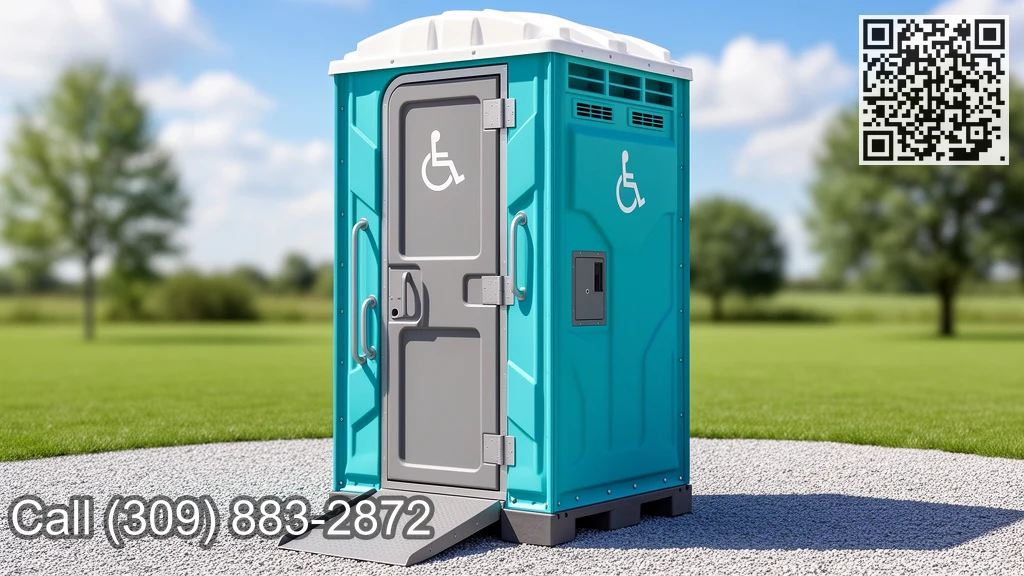
A provider might legally offer an ada mobile toilet model planned to fulfill availability needs. However the arrangement being used involves at the very least 3 moving parts: the unit itself, the course to it, and the entry conditions at the area where it is placed. If any of those fail, completion customer experiences failure.
This is where purchasers require a little healthy uncertainty. Not hostility, just precision. Ask what the system is intended to supply. Ask how the easily accessible device must be mounted. Ask what site problems might compromise availability. Ask that is responsible for ramps, landings, and path prep work. Those are operational inquiries, not legal theatrics, and they normally cause far better outcomes.
I have found that excellent suppliers appreciate straight concerns. They prefer to figure out a bad positioning concern before shipment than suggest about it after guests show up. The rubbing normally comes when nobody owns the route. The occasion coordinator assumes the site crew will manage it. The website staff assumes the toilet supplier will certainly suggest them. The supplier assumes the customer selected a compliant place. After that everybody is surprised when the available system is practically existing however almost unusable.
Temporary occasions are not exempt from respectful planning
Some of the most unpleasant availability errors occur at occasions meant to really feel welcoming: college events, area fairs, charity runs, exterior wedding events, metropolitan events. The atmosphere is cheerful, the organizers are earnest, and the portable toilet strategy is treated as a background information up until someone explains that the only available device is across a rough field or behind a line up barrier.
The Accessibility Board's analysis issues right here since it makes plain that temporary events are not outside the expectation for accessible devices in mobile commode collections. The practical takeaway is straightforward. If you are developing a short-term environment for individuals to gather, access belongs in the earliest site discussions, not the last agitated hour before opening.
That does not suggest every website becomes very easy. Historical grounds, constrained urban blocks, soft terrain, and emergency situation problems all develop genuine issues. But tough sites require more judgment, not less. Often the most effective offered compliant positioning is not the most hassle-free place for procedures. Sometimes you need to revamp secure fencing, reroute pedestrians, or quit a prime vendor location to maintain an easily accessible path. Those compromises are precisely what accountable preparation looks like.
The more comprehensive compliance environment need to change just how organizations think
Accessibility is being implemented in a more comprehensive conformity setting across sectors. One current sign of that bigger pattern is the Department of Justice's 2026 guidance extending the target date for sure state and city government internet and mobile access regulations to April 26, 2027 for larger entities. That development is about digital availability, not portable bathrooms, yet it shows something essential: ADA compliance is not fading into the background. It is staying energetic, visible, and operational.
For companies, that broader context matters. The very same entity taking notice of easily accessible websites, electronic forms, and public interaction must likewise take note of physical access in short-term areas. The information differ, but the attitude is the same. Availability is not a box to check once. It is a standard to maintain in the locations where people actually engage with your solution, task, or event.
Common failure factors I would fix first
When a setup really feels uncertain, I would not begin with abstract lawful discussions. I would start with the problems probably to obstruct genuine usage:
- an accessible system given in the incorrect quantity for the cluster
- a course that looks satisfactory on paper but is blocked or unpredictable in practice
- an entryway that depends on a ramp or touchdown that was never properly planned
- a device identified inadequately or otherwise identified with the International Sign of Accessibility
- a post-delivery website change that blocks handling or door access
Every one of these failings is preventable with much better coordination. None calls for elegant innovation or a huge budget. They call for focus, a site walk, and someone encouraged to state, "This place does not function, relocate currently."
What considerate conformity looks like in practice
The finest arrangements are usually silent. Nobody discuss them due to the fact that they just work. The ada certified mobile commode is simple to locate, convenient, and very easy to enter. The course becomes part of the normal site blood circulation. The entryway does not feel like an afterthought. The system is identified properly. Individuals use it without needing personnel rescue, description, or apology.
That is the basic worth aiming for, and it is extra attainable than many teams assume. A lot of failings I have actually seen were not caused by impossible sites or obscure code disputes. They originated from rushed presumptions. A person believed the easily accessible device itself was the whole solution. A person neglected that a portable bathroom still has to belong to an obtainable environment.
If you are preparing an ada mobile toilet or reviewing ada mobile toilet demands for an upcoming site, maintain the viewpoint simple. Count the collection appropriately. Supply the easily accessible systems needed. See to it they are determined correctly. After that invest as much power on the path and entryway as you do on the rental order. That is where conformity materializes, and where regard becomes visible.
 Ask ChatGPT
 Ask Grok
 Ask Perplexity
 Ask Claude
 Ask Google AI
 Ask You