ADA-Compliant Portable Toilets: Understanding the 5 Percent Policy
If you have actually ever before stood in an area, on a jobsite edge, or outside a momentary occasion venue trying to figure out how many portable toilets to get, you understand just how quickly the conversation relocates from basic logistics to access, self-respect, and lawful responsibility. The 5 percent rule appears simple at first. In technique, it is just one of one of the most commonly misconstrued parts of portable cleanliness planning.
That misconception normally starts with a bad assumption: if a website is short-lived, the ease of access rules have to be adaptable. They are not versatile in the way many people hope. For portable single-user commode collections, at the very least 5 percent of the units in each collection must be accessible, and that expectation uses also at short-lived events. That factor matters since temporary arrangements typically produce the very problems that make accessibility harder, uneven ground, hurried designs, crowded lines, and positioning choices made by whoever arrives initially with a forklift.
An ADA certified portable bathroom is not simply a standard device with a bigger footprint. Availability depends on the system itself, the path to it, the entryway, the bordering surface, and the technical toilet-room attributes inside. When any among those items is overlooked, the result may look appropriate from twenty feet away while still failing the person that actually needs to make use of it.
What the 5 percent rule truly means
The expression people keep in mind is "5 percent," yet words that does the real work is "cluster." The demand puts on each cluster of portable single-user bathrooms. In ordinary language, if portable commodes are organized together in one location, a minimum of 5 percent of that team should be accessible.
That sounds practically also straightforward, which is why it gets messed up. Event coordinators occasionally total every unit across the entire building and think they can position all obtainable devices in one spot. That is not the point of the policy. Ease of access is expected to exist where the toilet accessibility exists. If there are separate bathroom financial institutions offering different locations, each collection needs to be evaluated on its own.
That difference matters on celebration premises, fairgrounds, sports areas, performance websites, and large outdoor gatherings where washroom banks are spread across entries, food courts, seating areas, and parking areas. An individual using a mobility device ought to not have to go across the whole website since the easily accessible portable restroom was counted elsewhere on paper.
In everyday preparation, the 5 percent need likewise creates a rounding question. The confirmed rule is that at least 5 percent of systems in each collection should be accessible. The secure analysis is the common-sense one: if 5 percent produces a fraction, you can not offer a portion of a restroom, so the number of easily accessible systems requires to be enough to fulfill or go beyond that percentage. What matters operationally is avoiding any kind of computation that dips listed below the minimum.
Temporary does not imply exempt
One of one of the most relentless misconceptions in mobile restroom preparation is that momentary events exist in a type of gray area. They do not. The ease of access assumptions still apply. The Gain access to Board's interpretation is clear that the 5 percent requirement applies even at temporary events.
This is where troubles usually begin. A team spends weeks on safety and security, food solution, secure fencing, power, and waste removal. Then mobile bathrooms are included late while doing so, after the best ground is already taken and routes are currently crowded by hosting, generators, barriers, or vendor outdoors tents. At that point, the available units may technically be onsite however functionally unusable due to the fact that the path to them is obstructed or unstable.
I have actually seen this preparation pattern in many types. No one intends to exclude anybody. It takes place due to the fact that access obtains dealt with like an item selection instead of a site-planning choice. Ordering an ada compliant mobile commode is only the initial step. Positioning is where compliance is either preserved or lost.
What makes a mobile toilet accessible
People frequently use several expressions reciprocally: ada mobile washroom, ada mobile toilet, ada handicap accessible mobile bathroom, or ada certified obtainable mobile bathrooms. The phrasing varies, however the lawful and practical inquiry coincides: does the unit and its installation please the applicable availability requirements?
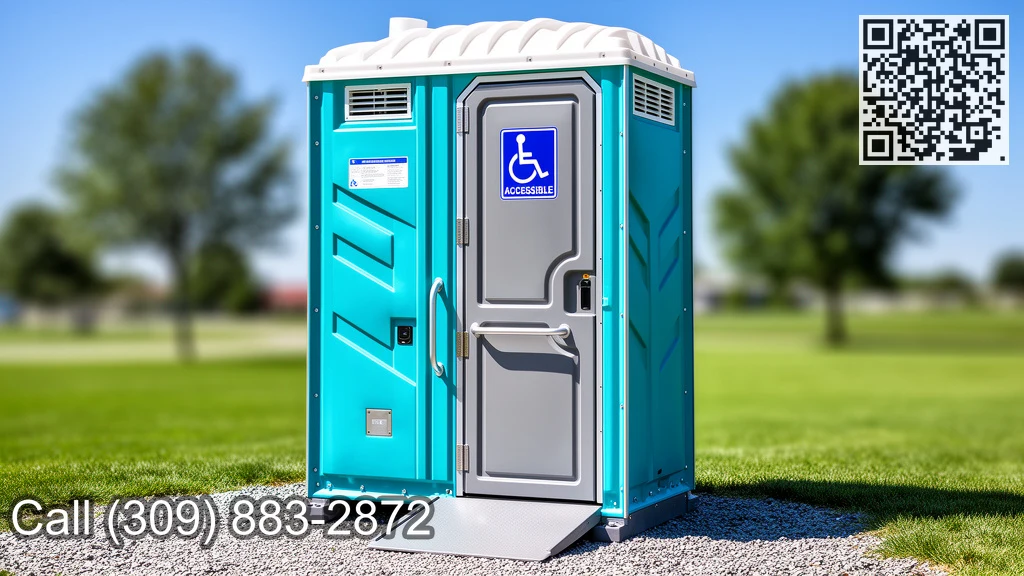
An available portable unit need to be related to the International Symbol of Accessibility. That noting is not ornamental. It tells individuals which device is intended to provide gain access to and helps team, assessors, and participants recognize it quickly.
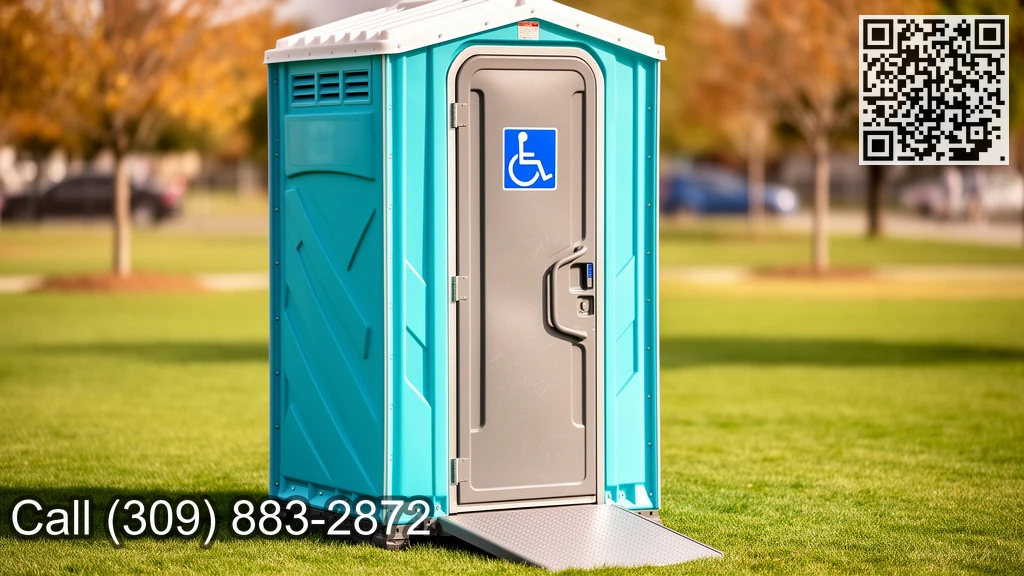
The unit need to additionally have an available path and entry. This is where otherwise decent plans crumble. If the path to the unit is soft, broken, obstructed, or set up in a manner that avoids strategy, the obtainable tag on the door does not fix the trouble. If ramps or landings are needed, those functions need to comply with the ADA technical requirements as well. The path and entrance condition are part of access, not extras.
Inside the system, technological toilet-room requirements still matter. Those consist of the needed turning space, clearances, and door handling clearances, along with applicable grab-bar and water-closet clearance policies. It is worth reducing below because lots of purchasers and renters assume "bigger cabin" indicates "compliant cabin." Size on its own proves very little. A spacious unit can still fall short if the clear flooring room, turning area, door strategy, or component relationships do not interact as required.
That is why knowledgeable rental groups ask various inquiries than newbie organizers. They do not just ask the amount of systems you want. They ask where the collections will certainly be located, what surface area they will certainly remain on, how individuals will certainly approach them, and whether any type of momentary ramps or landings are needed. Those concerns are not upselling. They are the useful backbone of ada portable toilet requirements.
The route to the restroom matters as long as the restroom
A great deal of availability failures happen outside the door.
Picture a community event on grass after a week of rainfall. The organizer orders an ada compliant portable restroom, positions it at the end of a row, and checks the box mentally. By afternoon, the ground around the entry is churned into ruts by foot website traffic and service carts. The available unit is practically there, but reaching it is currently the hardest part.
That instance prevails since people believe in regards to fixture compliance when they should be believing in regards to travel. The course, the entrance, and any required ramps or landings are not secondary considerations. They are core to whether the toilet can be utilized individually and safely.
This is additionally where "close adequate" causes trouble. If an accessible unit is placed near, yet not within, the real restroom collection offering a specific area, users might still encounter a long detour. If it is tucked behind barriers, put at the bottom of a slope, or gotten to just by going across loosened gravel or muddy turf, the sensible outcome can be exemption even when the rental billing claims "ADA device."
Why the collection policy changes intending on bigger sites
Smaller events can typically fix blunders with a quick positioning change. Larger sites are much less forgiving. As soon as secure fencing, emergency situation gain access to lanes, vendor footprints, and utility runs are developed, relocating washroom banks can interrupt numerous divisions at once.
That is why the cluster concept should have interest early. If your website has numerous teams of commodes offering distinctive zones, you must think of accessibility zone by zone, not just sitewide. Counting every little thing with each other can leave one location with no realistic gain access to at all.
A big occasion with numerous clusters highlights the point well. If one financial institution of systems is near the main gate, an additional near food service, and an additional by far-off car parking or outdoor camping areas, each of those clusters needs its own easily accessible existence. A single ada obtainable portable restroom near the entrance does not meaningfully offer a distant washroom count on the far side of the grounds.
The exact same reasoning applies past home entertainment. Exterior construction-adjacent public tasks, municipal events, short-term civil service sites, and seasonal operations all benefit from treating bathroom access as dispersed facilities instead of a single conformity tally.
The slim building difference that puzzles people
There is a certain detail in the requirements history that often gets duplicated without context. The ADA standards have actually differentiated portable commode devices at building and construction websites utilized solely by building employees. In the mentioned 1991 criterion, those units were excluded from the portable-toilet availability scoping requirement.
That sentence obtains exhausted regularly. People listen to "building site" and think any type of mobile commode supplied to any kind of job-related setup is exempt. That is not a secure presumption. The confirmed context right here is slim. For basic mobile commode services, the accessible-unit demand remains.
The sensible lesson is basic. Unless you are managing that specific, limited scenario, do not develop a washroom plan around the idea that access regulations in some way fall away due to the fact that the site is short-lived or work-related. If participants of the general public, occasion guests, clients, visitors, or others outside that narrow circumstance will certainly make use of the units, you need to approach the configuration expecting access commitments to apply.
What customers and renters must ask prior to delivery
When individuals look for ada portable bathroom rental solutions, they usually focus on stock first. Stock issues, obviously, however availability is only half the issue. The more enlightening inquiry is whether the carrier recognizes what needs to happen once the system arrives.
A mindful conversation prior to shipment can protect against expensive scrambling later on. The most effective inquiries are sensible, not abstract.
- How many different restroom clusters will the site have, and how many easily accessible systems are needed in each one?
- Where is the available path from the primary flow course per accessible unit?
- Will the entrance location, and any kind of required ramp or landing, fulfill the appropriate technical requirements?
- Is the system clearly related to the International Icon of Accessibility?
- Has any individual examined whether the bordering layout leaves appropriate method and maneuvering space when barricades, fence, and other devices are in place?
That brief list catches most of the avoidable errors I see in the field. It also shifts the conversation from "Do we have an ADA device?" to "Will this configuration in fact help the people who require it?"
Language matters less than performance
The market makes use of a great deal of overlapping terms. You will see ads for ada certified mobile restrooms, ada-compliant mobile bathrooms, ada compliant mobile toilet, ada-compliant mobile commode, and ada certified portable bathrooms. You may additionally hear older wording like ada handicap easily accessible mobile restroom.
From a conformity and individual viewpoint, the label itself is lesser than the material behind it. A vendor can define a system in many means. What issues is whether the unit is effectively recognized, accessible by route and entryway, and set up to satisfy the appropriate technological requirements for bathroom rooms.
This is one reason experienced planners do not depend on an item name alone. "Wheelchair accessible," "huge delay," and "ADA style" may all https://johnathanspzg535.cloudhinter.com/posts/ada-compliant-portable-toilets-grab-bar-and-water-wardrobe-clearance-essential appear calming, however they are not compatible terms. If you are in charge of the configuration, your genuine work is to verify that the device and its positioning please the criterion, not merely that the sales brochure uses the best vocabulary.
Common mistakes that look small until a person needs the unit
Portable bathroom availability teems with little decisions that seem harmless up until they incorporate into a genuine obstacle. A device established a few inches off level, a path tightened by short-lived fencing, an entrance approach pinched by an adjacent trash station, or a ramp included late without focus to technical needs can all transform whether the restroom is usable.
I remember one occasion layout evaluation where the team had actually done almost every little thing right. They had the best matter, the appropriate distribution, and the ideal system type. The problem was a row of crowd-control barriers positioned after the bathroom map was authorized. Those barriers minimized steering room at the easily accessible entryway. On paper, the occasion had certified centers. On the ground, one late change jeopardized access.
That type of trouble is discouraging since it is preventable. The fix is not usually remarkable. It is generally an issue of examining the last placement after all the "little bonus" are installed. Availability has a tendency to stop working in the handoff in between preparation and execution.
Compliance belongs to a more comprehensive enforcement climate
Accessibility conversations are also happening in a bigger compliance atmosphere. Federal ADA activity has continued throughout industries, consisting of a lot more recent guidance related to accessibility responsibilities in electronic areas for state and local government entities. Despite the fact that internet and mobile access regulations are a various topic from portable cleanliness, the larger signal is tough to miss: ADA conformity is not an inactive issue.
For organizations, municipalities, institutions, places, and organizers, that broader climate must urge a more mature technique. Accessibility is not a box to inspect at the end of procurement. It becomes part of functional planning, similar to security, cleanliness, and group flow.
That mindset helps with mobile bathroom choices since it minimizes last-minute improvisation. Teams that consistently believe in this manner tend to record washroom collections early, reserve available systems early, safeguard obtainable routes throughout website buildout, and examine the ended up layout with fresh eyes before opening.
A sensible way to think of the 5 percent rule
If the legal wording really feels abstract, there is a straightforward method to bring it down to earth. The 5 percent policy is truly about ensuring easily accessible usage is constructed right into each bathroom experience people will in fact run into onsite. Not somewhere else, not in theory, and not only if team step in to help.
That viewpoint alters the top quality of decisions. Rather than asking, "Did we order a minimum of one ada portable bathroom?" you start asking, "If a visitor comes close to any type of toilet area on this website, will there be an available alternative there, and can they get to and use it without unnecessary barriers?"
Those are the questions that separate official conformity from significant access.
Where mindful judgment still matters
Even with clear rules, mobile washroom planning still needs judgment. Websites are irregular. Weather condition adjustments. Suppliers show up late. Website traffic patterns change. Short-lived does not imply simple.
The greatest washroom strategies leave space for those realities. They do not deal with availability as a single system trust a spread sheet. They shield the course, protect the entrance, maintain the icon noticeable, and validate the arrangement after the website is fully built.
That is especially vital when organizing ada certified portable toilets for public-facing occasions. People do not experience your restroom plan as a legal theory. They experience it as a minute of requirement, frequently immediate, occasionally stressful, and always personal. When accessibility works well, it really feels regular, which is exactly the factor. When it fails, the failure is prompt and public.
The 5 percent regulation is not there to make complex preparation. It exists because gain access to can not depend on luck, range, or improvisation. If you are getting an ada portable commode rental, managing a location, or approving a website map, that is the basic worth going for: not simply enough systems on paper, but a configuration that individuals can really utilize with dignity.
 Ask ChatGPT
 Ask Grok
 Ask Perplexity
 Ask Claude
 Ask Google AI
 Ask You